From Policy to Impact: Understanding Economic Health Before the General Elections.
Introduction
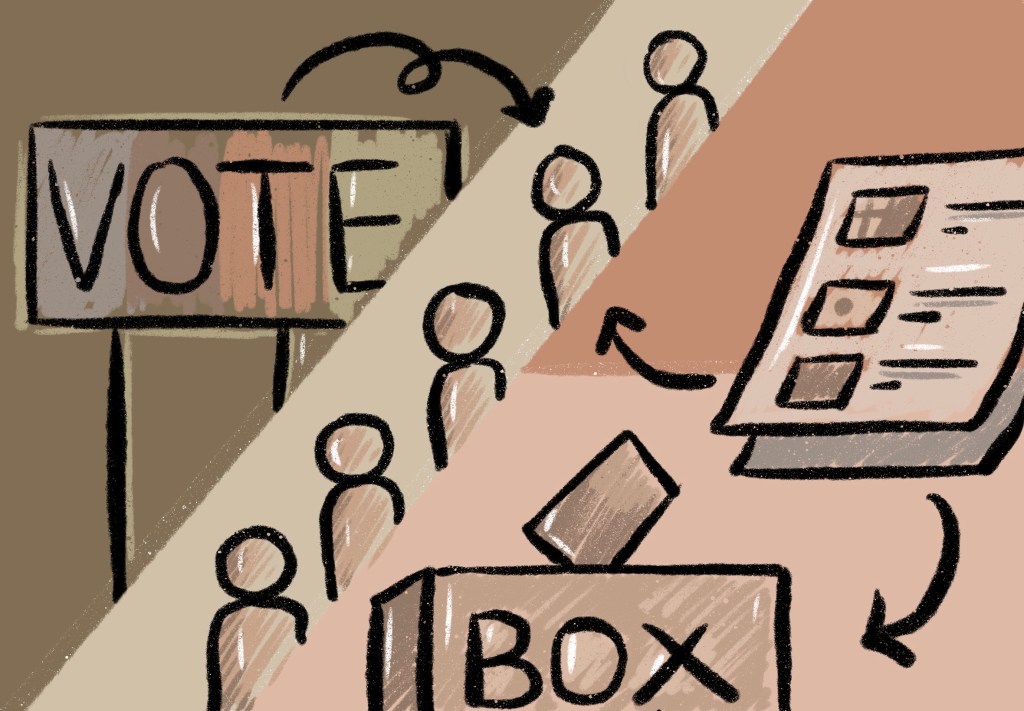
The year 2024 is set to witness general elections in over 50 different countries, wherein every individual voter holds the right to decide whom to vote for. However, assessing the policies of previous governments poses a challenging task, given the plethora of tools and vast datasets that are not easily accessible. This article endeavours to examine and provide a comprehensive answer to the question of how to best evaluate the impact of government policies on the economy.
The Challenge of Assessing Policy Impact
Governments worldwide have implemented policies aimed at achieving economic stability and promoting growth. Nevertheless, the evaluation of government policies is a complex task that entails the consideration of multiple economic, social, and political factors. The objectives of the policies and their implications for the economy and the country, both in the long and short term, must also be taken into account. Thus, assessing the effectiveness of government policies requires a comprehensive analysis of various aspects that influence their performance.
Theoretical Frameworks for Analysis
According to Friedman (1982), the efficacy of public policies should be evaluated based on their results, rather than just their intentions. While it is imperative to consider the objectives underlying policies, the intended positive outcomes of government social programs are not always realized (Phelan, 2018). Policy analysis can be approached from several theoretical perspectives, including group theory, political system theory, and policy output analysis. Nevertheless, a universally satisfactory approach to policy analysis remains elusive, as the objectives of policies are often complex and situational (Anyebe, 2018). The above observations underscore the need for a nuanced and context-specific approach to evaluating public policies.
Beyond GDP: Alternative Measures
In economic analysis, Gross Domestic Product (GDP) is a widely accepted yardstick for measuring a government’s policy as it offers a comprehensive view of the economy’s performance. However, it fails to account for several socio-economic factors such as externalities, sustainability, and pollution. As argued by Sen, Stiglitz, and Fitoussi (2009), focusing solely on specific measures like GDP or unemployment to summarize the complex phenomenon of an economy is challenging. The OECD Better Life Index addresses some of the important factors but falls short in capturing all the aspects of a country’s well-being. Additionally, the Human Development Index, which is used as an indicator of government policies, is limited in its effectiveness due to the lack of comprehensive data for international comparison (Fleurbaey and Blanchet, 2013). Therefore, it is crucial to consider multiple factors while analyzing a government’s policy to obtain a more accurate representation of the overall situation.
Case Study: Indonesian Rice Market
Assessing the economic impact of government policies is a nuanced process that poses significant challenges for both developed and developing nations. One way to gauge the efficacy of policies in promoting market efficiency is to examine the extent of government intervention in the market and its impact on addressing market failures. A case in point is the Indonesian rice market, where the government’s intervention has been instrumental in decreasing market intervention without adversely affecting market integration, leading to positive economic growth (Ismet, Barkley, & Llewelyn, 1998). The example underscores the relevance of understanding the intricacies of market dynamics in evaluating the efficacy of government policies and their potential to drive sustainable economic growth.
Conclusion
There exist various tools that facilitate the comparison of intentions and results of government policies. However, this process can be complex and may not incorporate all the relevant factors. Therefore, it is critical to carefully consider the economic growth of the specific country in question when assessing the effect of government policies. It is unwise to compare the outcomes of policies across different countries because they have diverse demands, objectives, and circumstances. In conclusion, to accurately evaluate the impact of government policies, one must take into account the unique context of each country.
Bibliography
Friedman, M. (1982) ‘Laws that do harm’, Newsweek. Available at: https:// miltonfriedman.hoover.org/friedman_images/Collections/2016c21/NW_10_25_1982.pdf
Phelan, J. (2018) ‘Milton Friedman: Judge public policies by their results, not their intentions’, American Experiment. Available at: https://www.americanexperiment.org/ milton-friedman-judge-public-policies-by-their-results-not-their-intentions/
Anyebe, A. (2018) ‘An overview of approaches to the study of public policy’, International Journal of Political Science. Available at: http://dx.doi.org/10.20431/2454-9452.0401002
Sen, A., Stiglitz, J. And Fitoussi, J. (2009) ‘Report by the Commission of the Measurement of Economic Performance and Social Progress’. Available at: http:// files.harmonywithnatureun.org/uploads/upload112.pdf
Fleurbaey, M. and Blanchet, D. (2013) ‘Introduction The Three Musketeers’. Available at: https://doi.org/10.1093/acprof:oso/9780199767199.003.0001
Ismet, M., Barkley, A. and Llewelyn, R. (1998) ‘Government Interventions and Market Integration in Indonesian Rice Markets’. Available at: https://doi.org/10.1111/ j.1574-0862.1998.tb00532.x
 Canny Om
Leave a comment