Yesterday, I visited the Subhadra Shakti Mela in Bhubaneswar—an event designed to showcase the work of women-led Self-Help Groups (SHGs) from across Odisha. With more than 300 stalls displaying handloom, arts and crafts, food products, and rural innovations, the atmosphere was vibrant and full of energy. The confidence of the participating women was unmistakable. Many of them have stepped out of traditional roles, formed collectives, accessed credit, and entered the marketplace—milestones that deserve recognition.
Yet as I walked through the mela, I found myself reflecting on a quiet tension that often goes unspoken. Events like this are undeniably successful in empowering women, offering market access, and strengthening livelihoods. But are we right to call this entrepreneurship?
My senior professor later reminded me that entrepreneurship, in practice, is also about mindset—taking initiative, embracing risk, stepping into public economic life. By that definition, these women are indeed entrepreneurs. And perhaps it is unfair, even insensitive, to dismiss their effort simply because they are not building the next big scalable innovation.
But as someone working in innovation and entrepreneurship research, I cannot ignore another truth: If we call every income-generating activity “entrepreneurship,” when will we ever demand innovation?
Most SHG businesses today operate at a livelihood level—replicating traditional products, relying on known techniques, and serving small, predictable markets. That is not a failure; it is a beginning. Yet the developmental system often treats this beginning as the destination.
If empowerment becomes the endpoint, then growth never becomes the expectation. And when growth is not expected, innovation remains optional—or worse, invisible.
India celebrates women stepping into the market, and rightly so. But we rarely ask:
What comes after the first sale?
Where is the pathway from micro-business to small enterprise?
How do these women access knowledge, technology, design, or markets needed to scale?
Who supports innovation in SHGs, beyond survival and replication?
Without these questions, the ecosystem unintentionally freezes women at the bottom of the economic pyramid. Empowerment alone cannot transform micro-enterprises into SMEs. Visibility cannot replace innovation. And participation cannot substitute for upward mobility.
This is not a critique of SHGs or government schemes. It is a reflection on how India’s definition of entrepreneurship has narrowed—so much so that we now celebrate survival as success, and participation as innovation.
To move forward, we need a broader conversation: Where is the bridge between livelihood and entrepreneurship? Between empowerment and innovation? Between participation and growth?
Until we build that bridge, India will continue to produce millions of micro-enterprises—but very few entrepreneurs in the true, innovation-driven sense.
I don’t claim to have the answers. But I believe this is a question India must face with honesty:
If we call this entrepreneurship, when will we ever demand innovation?
This reflection is not about dismissing the achievements of SHG women—it is about imagining what more is possible for them. And perhaps, for all of us.
Boredom, in today’s world, has earned a bad name. We treat it as an affliction — something to be cured by a screen, a scroll, a notification. But I’ve begun to wonder if boredom is not the absence of excitement, but the absence of awareness.
A life becomes boring when it loses its pulse — not because there’s nothing happening, but because nothing truly movesus anymore. We go through the motions: wake, work, rest, repeat. The calendar fills, the soul empties. The days don’t move forward; they just loop.
Perhaps the most dangerous kind of boredom is not stillness — it’s stimulation without meaning. We fill our time endlessly but rarely touch the depths of it. We’re always “busy,” but busy doing what? Consuming moments instead of living them. Boredom thrives not in silence, but in noise — in the endless chatter that drowns out wonder.
Some say a boring life is one without excitement. I disagree. I think a boring life is one without contradiction — without those internal questions that make us pause, doubt, and rediscover. Conflict gives life its colour. Certainty, though comfortable, often turns the brightest mind dull.
And yet, the quiet life — the one the modern world calls boring — may in fact be the richest of all. The person sitting by the sea, the one tending to a small garden, painting a tree, or reading a forgotten book by lamplight — they are not bored. They are alive. They’ve learned the art of presence, of being content without needing to be entertained.
The truth is, boredom isn’t something to escape. It’s a mirror — showing us how uncomfortable we are with ourselves. Maybe it’s not the world that’s dull, but our inability to sit still long enough to see its texture.
So I don’t fear boredom anymore. I think it’s a signpost — a quiet whisper that says, “You’ve stopped noticing.” And when I begin to notice again — the sound of the fan, the smell of rain, the hum of a train, the rhythm of my own thoughts — the boredom fades. Life begins to breathe again.
Because to live without excitement is bearable.
To live without awareness — that’s what’s truly boring.
PPP: A Realistic View on Salary Expectations and Lifestyle Differences
When considering moving from a developing country to a developed nation, discussions often involve Purchasing Power Parity (PPP) as a key metric for determining salary expectations and the cost of living. Many people use PPP converters to understand how much they should earn in another country to maintain a similar lifestyle. However, the use of PPP can be misleading. In reality, the nuances of lifestyle choices, luxury goods, and consumption patterns must be considered when evaluating the actual value of one’s salary. In this article, we’ll explore how PPP works, its limitations, and how to interpret it correctly when planning a move or comparing living standards between countries.
1. What Is PPP and Why It’s Used?
PPP is a theory in economics that compares the currencies of two countries through a “basket of goods” approach. The idea is that in the long run, the exchange rates between two countries should equalize this basket’s cost, ensuring that each currency’s purchasing power remains comparable. PPP can be helpful when comparing the relative cost of necessities such as food, housing, and services between countries. For instance, a person may find that they need £20,000 to live in the UK, but the same quality of life might cost only £6,000 in India based on the current PPP.
However, while PPP provides a rough estimate of the cost of living based on essential goods and services, it falls short when analyzing lifestyle choices that involve non-essential items like luxury goods or services, which are taxed or priced differently across countries.
2. The Limitations of PPP in Accounting for Luxury Goods
One of the primary flaws of PPP is that it doesn’t account for luxury or imported goods that are priced much higher in developing countries due to taxes, tariffs, and economic policies. For example, while PPP may give you a clear comparison of the cost of basic groceries or rent, it doesn’t consider the disparity in pricing for non-essential items like electronics, branded clothing, or imported goods.
Let’s take the example of an iPhone or a North Face jacket. These goods, though considered everyday items in the UK, are subject to hefty import taxes in India. As a result, someone in India may have to pay significantly more in proportion to their income than someone in the UK. A person earning £20,000 in the UK can easily afford to buy these items, but someone earning the equivalent of £6,000 in India would find such purchases much more burdensome.
3. Quality vs. Necessity: How Spending Power Changes with Income
As income rises, people in developed nations shift their focus from fulfilling basic needs to prioritizing the quality of the goods they purchase. The same doesn’t apply in developing nations, where spending is still heavily focused on necessities. For instance, someone earning £20,000 in the UK can afford to purchase Doc Martens, Nike, or Patagonia because these are seen as higher quality and long-lasting. In India, these items would be seen as luxury purchases due to their premium pricing, even though they may serve as essential, everyday wear in a developed economy like the UK.
PPP doesn’t capture this shift in consumer behaviour. In countries with higher incomes, the desire for quality over cheap alternatives becomes more pronounced, but PPP tends to overlook this aspect. This is particularly relevant when considering lifestyle changes as someone moves from a country where quality goods are taxed as a luxury to a country where they are affordable and widely available.
4. The Role of Lifestyle in PPP Comparisons
Beyond the cost of goods, lifestyle factors like housing, healthcare, and social services should also be considered when debating salaries and the cost of living. PPP typically accounts for the cost of local goods and services but doesn’t fully reflect the difference in lifestyle expectations between countries.
For instance, housing in the UK might appear to be more expensive than in India, but the availability of public services, healthcare, and social security in developed countries like the UK should be factored into overall living costs. In many cases, people moving to developed nations expect a higher quality of life with better infrastructure, security, and access to services, even if it means spending more on rent or utilities.
Thus, when considering a salary in a developed country, it’s essential to factor in these additional lifestyle benefits rather than relying solely on PPP conversion rates.
5. Why Understanding PPP Is Not Enough: Considering the Bigger Picture
While PPP can provide a rough estimate of how much one might need to live in a foreign country, it’s far from a complete tool for salary or lifestyle comparison. Understanding the limitations of PPP can prevent unrealistic expectations when planning a move abroad. When deciding on income expectations or cost-of-living changes, it’s crucial to:
• Assess lifestyle changes: Consider the standard of living and how much you value quality over cost in goods and services.
• Evaluate non-economic factors: Public services, healthcare, housing quality, and social security must be considered to understand the true cost of living.
• Understand local pricing structures: Be aware of how import duties, taxes, and tariffs on luxury goods can impact your spending power in different countries.
In conclusion, while PPP provides a useful starting point for comparing costs across countries, it is crucial to understand its limitations. Real-world factors such as the cost of luxury goods, local tax structures, and lifestyle expectations must all be factored into salary negotiations and relocation decisions. Moving to a new country involves more than just exchanging currencies—it requires a deeper understanding of how much your money is really worth in the local context.
I stand at a juncture, besieged by questions that wrestle within my soul, questions that may have no answers yet, questions that seem bereft of rationality. It is as if an abundance of answers exist, yet none seem correct, none seem feasible in the realm of reality. Though I perceive a glimmer of light within my eyes, darkness envelops me on all sides.
This darkness does not instil fear in my heart, but I find myself confounded as to how to diminish it. Alone I stand, yet not lonely, for I am certain there are many like me, gazing into the abyss of darkness with unyielding resolve. They, too, must grapple with questions and harbour a burning desire to embark on a quest for answers that have never been known.
In this shared struggle, I find solace. I am not alone in this endeavour. I shall not cease until I become the embodiment of the answers I seek.
In recent years, the youth of India have become increasingly fixated on clearing government exams, particularly the UPSC and JEE/NEET exams. This intense focus, while understandable given the prestigious nature of these positions, has revealed significant issues that deserve public attention and discussion.
The Harsh Reality of Exam Obsession
High Stakes, Low Success Rates The allure of securing a position through these exams is undeniable. Government jobs offer stability, prestige, and a sense of contributing to the nation’s growth. However, the selection ratio is alarmingly steep, with success rates often below 1%. Despite these odds, many aspirants are willing to dedicate years—sometimes up to six or more—to this pursuit, often without considering alternative career paths.
The Cost of Obsession This single-minded dedication comes at a high cost. Many young individuals invest their prime years solely in exam preparation, neglecting to develop other marketable skills or explore different career options. This not only leads to a massive wastage of time but also limits their employability in a rapidly changing job market. The fixation on these exams can also lead to mental health issues, including stress, anxiety, and depression, as the pressure to succeed becomes overwhelming.
Ethical Concerns and Unintended Consequences The intense competition and desperation to clear these exams have also given rise to unethical practices. Scams and paper leaks are becoming more frequent, with vested interests exploiting the high stakes environment. This not only undermines the integrity of the examination process but also adds to the overall frustration and disillusionment among aspirants.
A Call for Reflection and Dialogue
While the ambition to crack these exams and secure a government job is commendable, it’s crucial to address the broader implications of this obsession. We need to foster a dialogue that encourages young people to reflect on their goals and consider a more balanced approach to their careers.
It’s time to bring this “elephant in the room” into the spotlight and discuss how we can better support our youth in navigating their career paths. What alternative avenues can we explore? How can we ensure that their efforts are not in vain, even if they do not succeed in these exams?
I invite you to share your thoughts and experiences on this issue. Let’s explore how we can create a more supportive and realistic framework for our future generations.
Navigating the Reality of Minimum Income Struggles
Introduction to the problem
It is commonly understood that bias is often viewed as a negative concept because it involves disregarding evidence that contradicts one’s preconceived notions or way of thinking. However, there is also a phenomenon referred to as the “positive bias” or “Pollyanna Principle” where individuals tend to focus solely on the positive aspects while disregarding any negative aspects or challenges (Ackerman, 2018).
It’s important to keep in mind that adversities can be more severe than they appear, particularly when excessive positivity is present due to an increase in income. Even a slight increase of 5% can push one’s income into a taxable bracket while the exemption limit remains unchanged. For instance, in the UK, the tax-exempt income is £12,570. Let’s assume you earn £12570 annually, and your income increases by 5% (equivalent to £630), bringing your total income to £13,200. Now, since the excess income is taxed at 20% (£126), you will receive only £504 after paying taxes, which is 4% of the tax-exempt income. Interestingly, the current inflation rate in the UK is also 4%. It is surprising to note that despite the increase in the minimum wage, there is no significant difference or positive impact on income levels.
If there were tax exemptions for the increased income percentage and lower inflation rates like the European Union’s 2.6%, there could have been a 1% difference. Additionally, the rent has increased by 7%, along with other services such as gym, transportation, groceries, etc.
The possible Solution
It is essential to seek uncomplicated approaches to address the problem of excessive spending, which is frequently disregarded. Nevertheless, bringing about such solutions can prove to be a challenge. Although the solution might seem clear when explaining it to others, applying it to our personal lives can be troublesome. We are frequently lured to indulge in purchases we’ve always desired with any additional income. So what is the remedy? The solution is “Sensible spending”(Galdi, 2020).
Sensible spending habits entail making conscious and informed decisions regarding the utilization of financial resources to ensure economic stability while simultaneously preserving our objectives and necessities. It can be achieved by making wise spending decisions, and adhering to the budget while understanding the difference between needs and desires (Abdikarim, 2023).
The intention of this article is not to convey a pessimistic outlook on income growth or to advocate for prudent expenditure as a tactic. Rather, this article aims to offer readers a perspective to contemplate the economics at play and to foster a mindset where individuals can make an approximate assessment of how their spending patterns could affect their overall financial plan. It is crucial to increase awareness about the potential impact of economic discussions on vulnerable populations and adopt a more empathetic approach towards them.
In the forthcoming article, we will emphasize sensible spending habits by using examples and research data to highlight the key points.
References
Ackerman. C (2018) Pollyanna Principle: The Psychology of Positivity Bias.
From Policy to Impact: Understanding Economic Health Before the General Elections.
Introduction
The year 2024 is set to witness general elections in over 50 different countries, wherein every individual voter holds the right to decide whom to vote for. However, assessing the policies of previous governments poses a challenging task, given the plethora of tools and vast datasets that are not easily accessible. This article endeavours to examine and provide a comprehensive answer to the question of how to best evaluate the impact of government policies on the economy.
The Challenge of Assessing Policy Impact
Governments worldwide have implemented policies aimed at achieving economic stability and promoting growth. Nevertheless, the evaluation of government policies is a complex task that entails the consideration of multiple economic, social, and political factors. The objectives of the policies and their implications for the economy and the country, both in the long and short term, must also be taken into account. Thus, assessing the effectiveness of government policies requires a comprehensive analysis of various aspects that influence their performance.
Theoretical Frameworks for Analysis
According to Friedman (1982), the efficacy of public policies should be evaluated based on their results, rather than just their intentions. While it is imperative to consider the objectives underlying policies, the intended positive outcomes of government social programs are not always realized (Phelan, 2018). Policy analysis can be approached from several theoretical perspectives, including group theory, political system theory, and policy output analysis. Nevertheless, a universally satisfactory approach to policy analysis remains elusive, as the objectives of policies are often complex and situational (Anyebe, 2018). The above observations underscore the need for a nuanced and context-specific approach to evaluating public policies.
Beyond GDP: Alternative Measures
In economic analysis, Gross Domestic Product (GDP) is a widely accepted yardstick for measuring a government’s policy as it offers a comprehensive view of the economy’s performance. However, it fails to account for several socio-economic factors such as externalities, sustainability, and pollution. As argued by Sen, Stiglitz, and Fitoussi (2009), focusing solely on specific measures like GDP or unemployment to summarize the complex phenomenon of an economy is challenging. The OECD Better Life Index addresses some of the important factors but falls short in capturing all the aspects of a country’s well-being. Additionally, the Human Development Index, which is used as an indicator of government policies, is limited in its effectiveness due to the lack of comprehensive data for international comparison (Fleurbaey and Blanchet, 2013). Therefore, it is crucial to consider multiple factors while analyzing a government’s policy to obtain a more accurate representation of the overall situation.
Case Study: Indonesian Rice Market
Assessing the economic impact of government policies is a nuanced process that poses significant challenges for both developed and developing nations. One way to gauge the efficacy of policies in promoting market efficiency is to examine the extent of government intervention in the market and its impact on addressing market failures. A case in point is the Indonesian rice market, where the government’s intervention has been instrumental in decreasing market intervention without adversely affecting market integration, leading to positive economic growth (Ismet, Barkley, & Llewelyn, 1998). The example underscores the relevance of understanding the intricacies of market dynamics in evaluating the efficacy of government policies and their potential to drive sustainable economic growth.
Conclusion
There exist various tools that facilitate the comparison of intentions and results of government policies. However, this process can be complex and may not incorporate all the relevant factors. Therefore, it is critical to carefully consider the economic growth of the specific country in question when assessing the effect of government policies. It is unwise to compare the outcomes of policies across different countries because they have diverse demands, objectives, and circumstances. In conclusion, to accurately evaluate the impact of government policies, one must take into account the unique context of each country.
Bibliography
Friedman, M. (1982) ‘Laws that do harm’, Newsweek. Available at: https:// miltonfriedman.hoover.org/friedman_images/Collections/2016c21/NW_10_25_1982.pdf
Phelan, J. (2018) ‘Milton Friedman: Judge public policies by their results, not their intentions’, American Experiment. Available at: https://www.americanexperiment.org/ milton-friedman-judge-public-policies-by-their-results-not-their-intentions/
Sen, A., Stiglitz, J. And Fitoussi, J. (2009) ‘Report by the Commission of the Measurement of Economic Performance and Social Progress’. Available at: http:// files.harmonywithnatureun.org/uploads/upload112.pdf
Ismet, M., Barkley, A. and Llewelyn, R. (1998) ‘Government Interventions and Market Integration in Indonesian Rice Markets’. Available at: https://doi.org/10.1111/ j.1574-0862.1998.tb00532.x
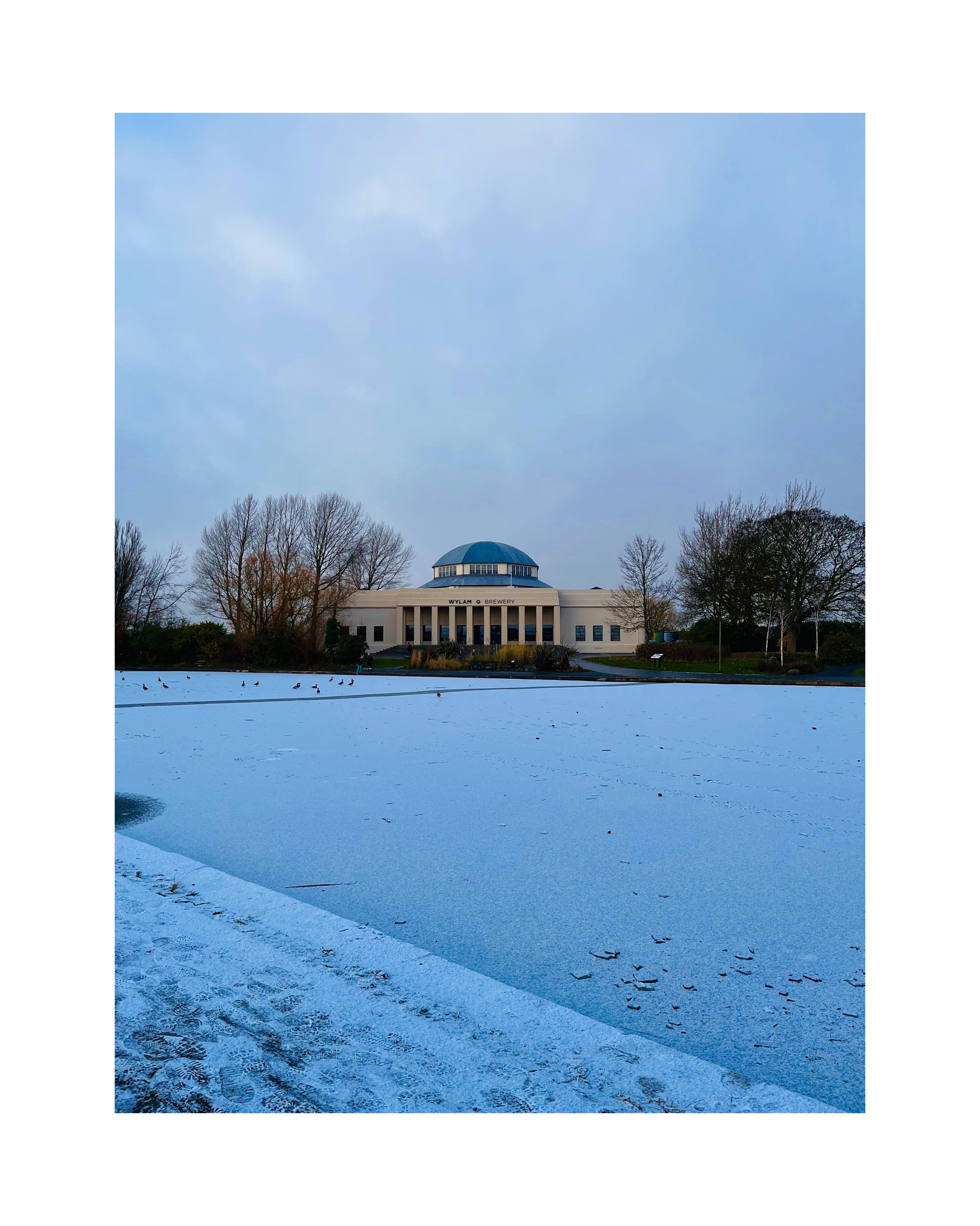
Both pictures were taken in December, a year apart.
Contrasting winters representing nature at its best and adversity as a warning. As we enjoy the flurries adding a white velvet to the earth’s surface, with soaring Christmas spirits, it is inevitable to deny how every Christmas period were drastic.
With the world being engaged in carols and sweet treats, the climate crisis is the bitter truth we all want to ignore. We still fancy the white Christmas, and exchanging gifts but never fancy a better environment around us. Perhaps it is the time for us to collectively recognise the gift that nature wants from us, in the form of attention towards the adversities.
A mere state, where if you express the entity within and around, you will be considered as someone who adores grief towards the fascinating life around you and is either unfit or uneducated towards appreciating the beauty, rather than just existing as a dead soul.
In contrast, if you don’t choose to open up yourself to the world, fairly judgemental, yet eager-to-listen and plot fantasies out of truth, while with constant efforts to express their affection rather than empathy, you will always find yourself in the thick of frequent ears.
Still wonder if there is any position of an individual to express the subtle view of life around, or is it a mere statement to say, “I am all ears” without pity!
Maybe that’s a question for you to answer, as “I am all ears”!









 Canny Om
Leave a comment